Share our site:

SHARE
139
Metallurgy. BIRINGUCCIO. La pyrotechnie, ou art du feu.
1556
EUR 2.500,00
Base d'asta
EUR 4.000,00 / 5.000,00
Stima
Descrizione
Metallurgy. BIRINGUCCIO. La pyrotechnie, ou art du feu.
1556
1556
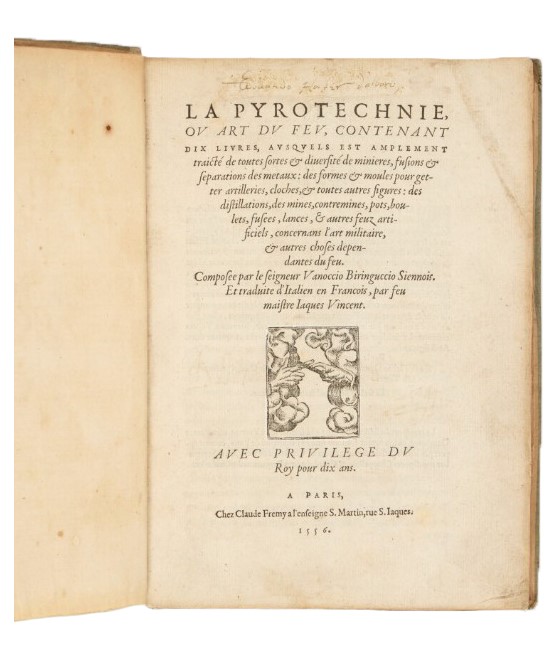
BIRINGUCCIO, Vannoccio. La pyrotechnie, ou art du feu, contenant dix livres…
Paris, Chez Claude Fremy a l'enseigne S. Martin, rue S. Iaques, 1556
4to. 223x155 mm. Legatura in mezza pergamena e cartonato, titolo manoscritto sul dorso. Carte [4], 230. Errori di numerazione. Carattere Italico e Romano. Marca tipografica sul Frontespizio, Iniziali ornate e numerose illustrazioni xilografiche nel testo. Tracce d’uso alla legatura, qualche piccola macchia, qualche leggera sfumatura marginale, le ultime dieci carte presentano una piccola scheggiatura ai bordi anteriori e una pallida macchia d'umidità.
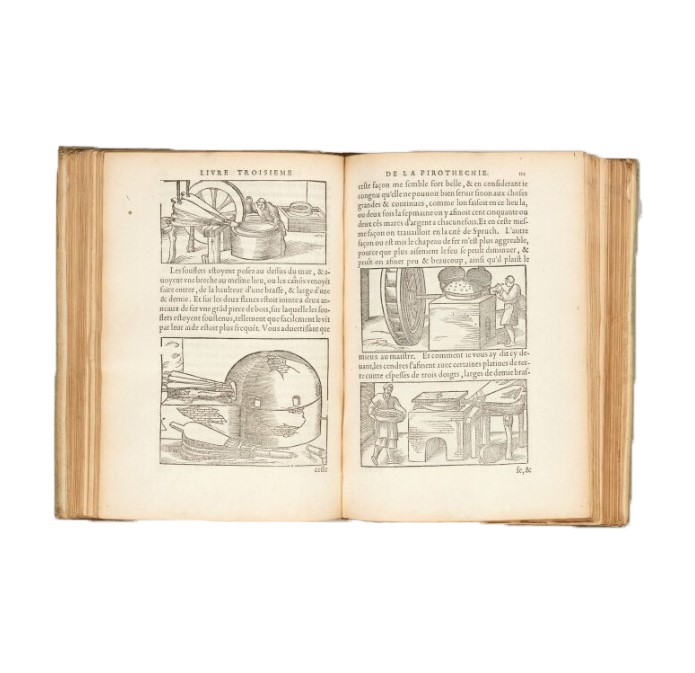
Rara prima edizione francese, opera riccamente figurata che illustra la tecnologia pratica del XVI secolo. Tradotta da Jacques Vincent de Crest-Arnauld contiene 84 figure impresse in xilografia nel testo. Suddivisa in dieci libri è la prima e più celebre opera sulla metallurgia e mineralogia, con riferimenti anche all'alchimia. Mieli: “Il trattato di Biringuccio si può qualificare come la prima opera organica relativa a tutto un gruppo di scienze applicate che sia stata pubblicata nel Rinascimento.” Hoover Coll. 129-30: "one of the classics in the history of science and technology". Duveen: “famous book on metallurgy and mining, containing interesting chapters on alchemy and illustrated by very fine woodcuts”. Norman: “The first comprehensive treatise on the pyrotechnic arts. … Virtually all of Biringuccio's descriptions are original, based upon first-hand information garnered during his various employments as a mine and forge operator, director of the Sienese mint, cannon caster and fortification builder, director of building construction at the Duomo, and head of the papal foundry and munitions works… Biringuccio's work is important to art history for its description of the Renaissance methods of casting medallions, statues and bells; and to the history of printing for containing the earliest known account of typecasting. His contributions to chemistry include the first account of silver amalgamation and liquation, the earliest mention of cobalt blue and manganese, and the first description of antimony, antedating that of Basil Valentine by fifty years.”
Su questa edizione francese, nota Schuh: “The text is excellently printed and the illustrations well copied. However, the translation is not particularly good, having omissions, condensations and misinterpertations. It was the three French editions that most English writers have used for source material, thereby providing a false interpertation of Biringucci's ideas.”
Norman, 238 (1540 edition); STC 106. Hoover Coll. 129 (I ed.); Duveen 79; Mieli, Scienziati ital. I, pp. 20-24; Neu, Chemical, Medical, & Pharmaceutical Books, 471; Shaaber, Sixteenth Century Imprints, B-419.
Curtis P. Schuh, Mineralogy & Crystallography, 2007, I, n. 595.
Condition Report
BIRINGUCCIO, Vannoccio. La pyrotechnie, ou art du feu, contenant dix livres…
Paris, Chez Claude Fremy a l'enseigne S. Martin, rue S. Iaques, 1556
4to. 223x155 mm. Binding in quarter cardboard and vellum, handwritten title on spine. Leaves [4], 230. Errors in the numbering. Roman and Italic type. Printer’s device on titlepage, adorned initials and numerous woodcut illustrations in the text. Traces of wear on binding, some little stains and pale waterstains in the last pages.
A rare first French edition, this richly illustrated work describes practical technology of the 16th century. Translated by Jacques Vincent de Crest-Arnauld, it contains 84 woodcut illustrations in the text. Divided into ten books, it is the first and most famous work on metallurgy and mineralogy, with references to alchemy. Mieli: “Il trattato di Biringuccio si può qualificare come la prima opera organica relativa a tutto un gruppo di scienze applicate che sia stata pubblicata nel Rinascimento.” Hoover Coll. 129-30: "one of the classics in the history of science and technology". Duveen: “famous book on metallurgy and mining, containing interesting chapters on alchemy and illustrated by very fine woodcuts”. Norman: “The first comprehensive treatise on the pyrotechnic arts. … Virtually all of Biringuccio's descriptions are original, based upon first-hand information garnered during his various employments as a mine and forge operator, director of the Sienese mint, cannon caster and fortification builder, director of building construction at the Duomo, and head of the papal foundry and munitions works… Biringuccio's work is important to art history for its description of the Renaissance methods of casting medallions, statues and bells; and to the history of printing for containing the earliest known account of typecasting. His contributions to chemistry include the first account of silver amalgamation and liquation, the earliest mention of cobalt blue and manganese, and the first description of antimony, antedating that of Basil Valentine by fifty years.”
On this French edition, note Schuh: “The text is excellently printed and the illustrations well copied. However, the translation is not particularly good, having omissions, condensations and misinterpertations. It was the three French editions that most English writers have used for source material, thereby providing a false interpertation of Biringucci's ideas.”
Norman, 238 (1540 edition); STC 106. Hoover Coll. 129 (I ed.); Duveen 79; Mieli, Scienziati ital. I, pp. 20-24; Neu, Chemical, Medical, & Pharmaceutical Books, 471; Shaaber, Sixteenth Century Imprints, B-419.
Curtis P. Schuh, Mineralogy & Crystallography, 2007, I, n. 595.
Bibliografia
Norman, 238 (1540 edition); STC 106. Hoover Coll. 129 (I ed.); Duveen 79; Mieli, Scienziati ital. I, pp. 20-24; Neu, Chemical, Medical, & Pharmaceutical Books, 471; Shaaber, Sixteenth Century Imprints, B-419.
Curtis P. Schuh, Mineralogy & Crystallography, 2007, I, n. 595.
mer 18 Febbraio 2026
Orari Asta
Via dei Soncin, 28 35122 Padova
ESIBIZIONE: 13-16 Febbraio 2026 solo su appuntamento.
Per prenotare il vostro appuntamento chiamare il numero 049 8755317 o mandare una email a info@badoemart.it
Ricordiamo che il nostro staff rimane a vostra disposizione per eseguire condition report dettagliati con foto aggiuntive a quelle già presenti in catalogo.

Bado e Mart
https://www.badoemart.it/img-footer/logo.png
Bado e Mart Srl
Via Dei Soncin, 28
35122 Padova Veneto Italy
Tel. +39 049 8755317
Fax +39 049 8755317
E-mail: info@badoemart.it
Partita IVA IT00773300280
35122 Padova Veneto Italy
Tel. +39 049 8755317
Fax +39 049 8755317
E-mail: info@badoemart.it
Partita IVA IT00773300280
Follow us on
Copyright Bado e Mart 2018. All rights reserved.
Realized by Thetis Srl
Realized by Thetis Srl