Share our site:

SHARE
21
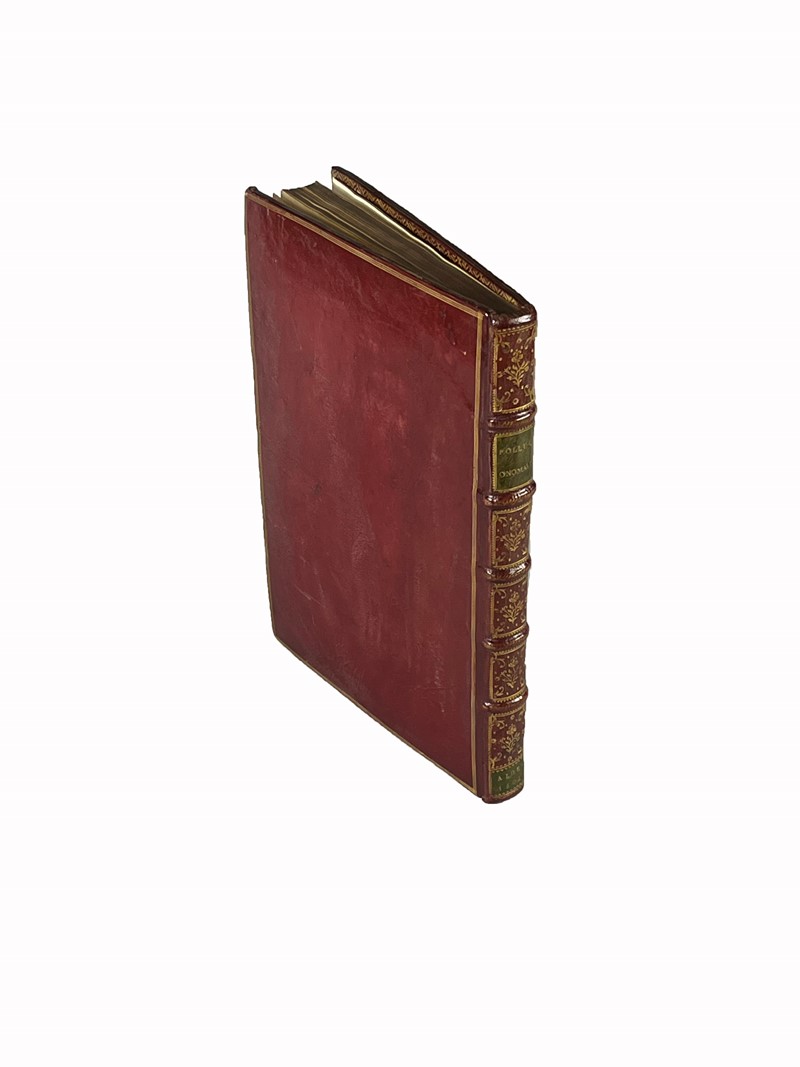
Dark Red Morocco Binding. POLLUX. Pollucis vocabularii Index in latinum traslatus. [Iouliou Polydeukous Onomastikon. Iulii [..]
1502
EUR 10.000,00
Base d'asta
EUR 12.000,00 / 15.000,00
Stima
Descrizione
Dark Red Morocco Binding. POLLUX. Pollucis vocabularii Index in latinum traslatus. [Iouliou Polydeukous Onomastikon. Iulii [..]
1502
1502
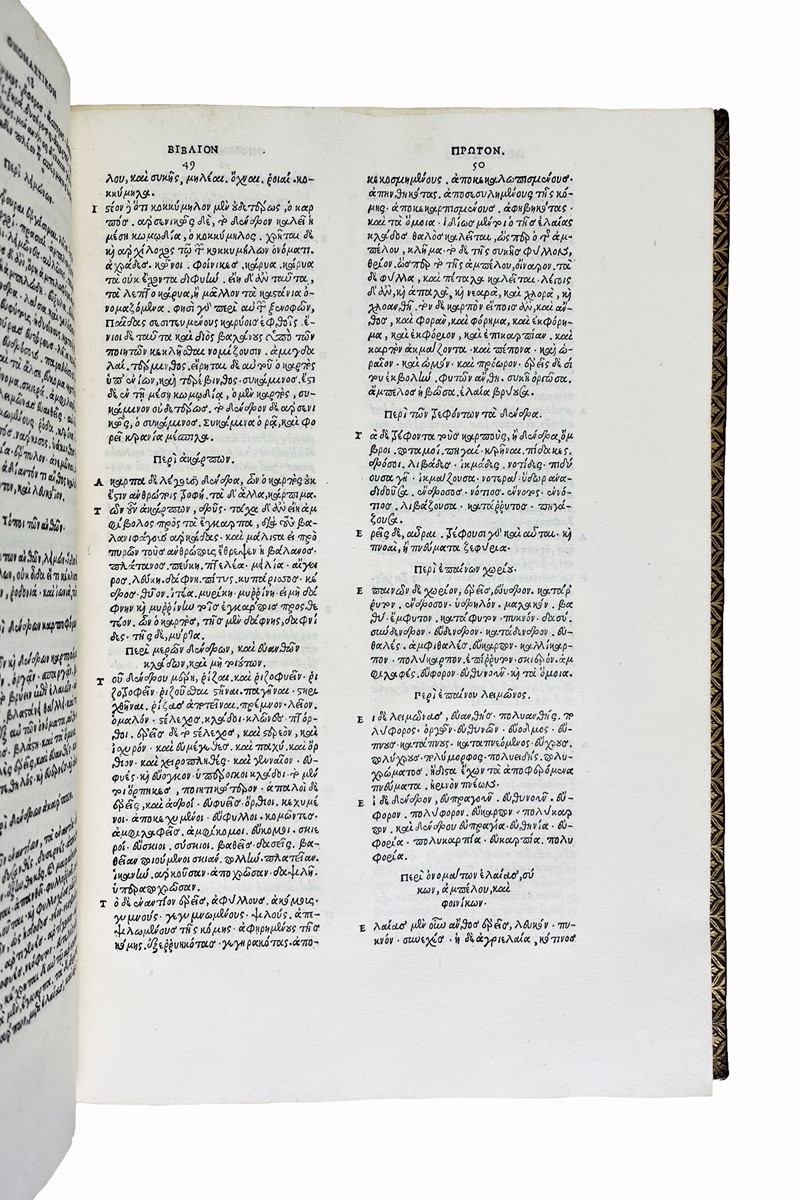
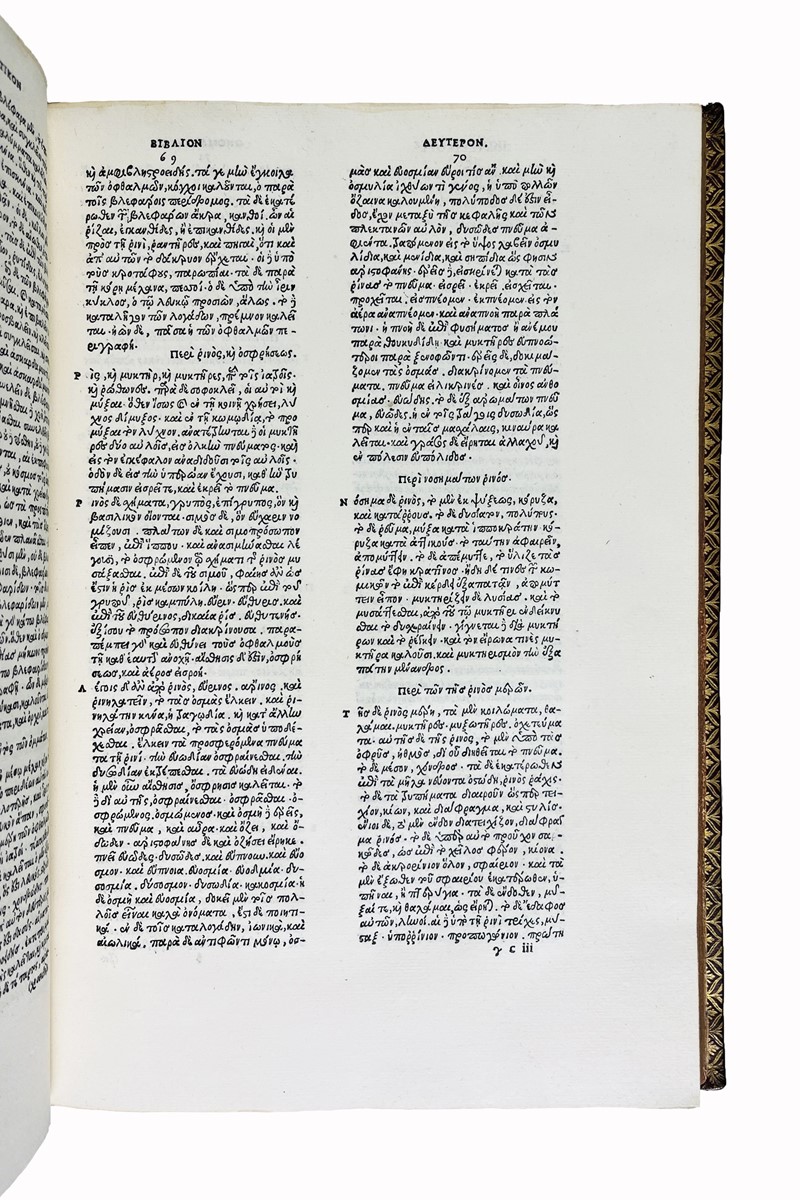
POLLUX, Julius. Pollucis vocabularii Index in latinum traslatus. [Iouliou Polydeukous Onomastikon. Iulii Pollucis vocabularium].
Venezia, Aldo Manuzio, 1502
Rarissima Editio Princeps. Importante dizionario greco, testo in magnifici caratteri greci. L'Onomastikon, composto dal grammatico greco Ioulios Polydeukes (Julius Pollux) nel II secolo d.C., è un lessico di locuzioni e sinonimi in dialetto attico. Suddiviso per argomenti, include informazioni preziose su antiche usanze, mitologia e vita quotidiana, toccando temi diversi come oracoli, poesia, cavalli, alberi e navigazione. È inoltre una fondamentale fonte di Antichità Greche e Romane giacché cita numerosi frammenti di opere perdute. Polluce, menzionato nelle Vite dei sofisti di Filostrato, fu titolare della cattedra di retorica presso l'Accademia ateniese sotto l'imperatore Commodo.
Enciclopedia Britannica: “It supplies in passing much rare and valuable information in many points of classical antiquity - objects in daily life, the theater, politics- and quotes numerous fragments of lost works. Pollux was probably the person satirized by Lucian as a worthless and ignorant person who gains a reputation as an orator by sheer effrontery and pilloried in his Lexiphanes, a satire upon the affectation of obscure and obsolete words.”
L'editio princeps dell'Onomasticon, pubblicata da Aldo Manuzio nel 1502, rese l'opera ampiamente disponibile agli studiosi e agli antiquari del Rinascimento. Aldo aggiunse gli indici in greco e latino, ampliandone ulteriormente l'uso per gli studenti di greco.
Renouard, pp. 32-33; Adams P-1787; Ahmanson Murphy 54; BM STC It., p. 531.
Cfr. John H. Dierkx, Dermatologic terms in the Onomasticon of Julius Pollux” in The American Journal of Dermatopathology, 2004.
Folio. 295x202 mm. Legatura francese del XVIII secolo, marocchino granata, dorso con nervi in rilievo, suddiviso in scomparti e decorato con fioroni, tasselli con il titolo in marocchino verde, titoli verdi, triplo filetto dorato che incornicia i piatti, roulette interna in oro, tagli dorati.
Carte non numerate 112 [9, con Titolo, Index Latino e Index Greco; 102 con 408 colonne; 1, con Registro e Colophon sul recto, verso bianco]. Carattere Italico, Greco, Romano; Lettere guida. Magnifico esemplare in marocchino francese del XVIII secolo, legatura realizzata per un bibliofilo appassionato.
Condition Report
POLLUX, Julius. Pollucis vocabularii Index in latinum traslatus. [Iouliou Polydeukous Onomastikon. Iulii Pollucis vocabularium].
Venezia, Aldo Manuzio, 1502
Extremely rare first edition. Important Greek dictionary, text in magnificent Greek characters. The Onomastikon, compiled by the Greek grammarian Ioulios Polydeukes (Julius Pollux) in the 2nd century AD, is a lexicon of phrases and synonyms in the Attic dialect. Divided by topic, it includes valuable information on ancient customs, mythology, and daily life, touching on various themes such as oracles, poetry, horses, trees, and navigation. It is also a fundamental source of Greek and Roman antiquity, as it cites numerous fragments of lost works. Pollux, mentioned in Philostratus' Lives of the Sophists, was professor of rhetoric at the Athenian Academy under Emperor Commodus.
Enciclopedia Britannica: “It supplies in passing much rare and valuable information in many points of classical antiquity - objects in daily life, the theater, politics- and quotes numerous fragments of lost works. Pollux was probably the person satirized by Lucian as a worthless and ignorant person who gains a reputation as an orator by sheer effrontery and pilloried in his Lexiphanes, a satire upon the affectation of obscure and obsolete words.”
The first edition of the Onomasticon, published by Aldo Manuzio in 1502, made the work widely available to Renaissance scholars and antiquarians. Aldo added indexes in Greek and Latin, further expanding its use for students of Greek.
Renouard, pp. 32-33; Adams P-1787; Ahmanson Murphy 54; BM STC It., p. 531.
See John H. Dierkx, Dermatologic terms in the Onomasticon of Julius Pollux” in The American Journal of Dermatopathology, 2004.
Folio. 295x202 mm. 18th century French dark red Morocco binding, spine with nerfs and decorations in the section with flowers, title on green Morocco label, green titles, triple gilt rules framing covers, inner gilt rolls, gilt edges. 112 unnumbered leaves [9, with Titlepage, Latin and Greek Index; 102 with 408 columns; 1, with Register and Colophon on the recto, verso blank]. Italic, Greek and Roman type. Guide Letters. Wonderful specimen in French Morocco binding of 18th century, made for a passionate bibliophile.
Bibliografia
Renouard, pp. 32-33; Adams P-1787; Ahmanson Murphy 54; BM STC It., p. 531.
Cfr. John H. Dierkx, Dermatologic terms in the Onomasticon of Julius Pollux” in The American Journal of Dermatopathology, 2004.
mar 9 Giugno 2026
Orari Asta
Via dei Soncin, 28
35122 PADOVA
ESIBIZIONE: 3-5 Giugno 2026 solo su appuntamento.
Per prenotare il vostro appuntamento chiamare il numero 049 8755317 o mandare una email a info@badoemart.it
Ricordiamo che il nostro staff rimane a vostra disposizione per eseguire condition report dettagliati con foto aggiuntive a quelle già presenti in catalogo.

Bado e Mart
https://www.badoemart.it/img-footer/logo.png
Bado e Mart Srl
Via Dei Soncin, 28
35122 Padova Veneto Italy
Tel. +39 049 8755317
Fax +39 049 8755317
E-mail: info@badoemart.it
Partita IVA IT00773300280
35122 Padova Veneto Italy
Tel. +39 049 8755317
Fax +39 049 8755317
E-mail: info@badoemart.it
Partita IVA IT00773300280
Follow us on
Copyright Bado e Mart 2018. All rights reserved.
Realized by Thetis Srl
Realized by Thetis Srl