Share our site:

SHARE

130
SAINT-NON. Voyage pittoresque ou description des Royaumes de Naples et de Sicilie.
1781-1786
EUR 6.000,00
Base d'asta
EUR 8.000,00 / 10.000,00
Stima
Descrizione
SAINT-NON. Voyage pittoresque ou description des Royaumes de Naples et de Sicilie.
1781-1786
1781-1786
SAINT-NON, Abbé; de. Voyage pittoresque ou description des Royaumes de Naples et de Sicilie.
Paris, [Clousier], 1781-1786
5 Volumi in-folio. 538x340 mm. Legatura coeva mezza pelle e piatti in cartonato marmorizzato, angoli, titoli e numero di volume in oro su tasselli in marocchino rosso e verde sui dorsi a nervi con fregi dorati.
Così composto:
Vol. 1: pp. 6, XIII, 3, 252; 51 tavole incise fuori testo.
Vol. 2 (1.2): 4, XXVIII, 283, 9; 83 tavole fuori testo.
Vol. 3: 4, IV, XL, 184, 7-22, 185-201, 1 bianca; 64 tavole fuori testo.
Vol. 4: 6, XVIII, 4, 266; 71 tavole fuori testo.
Vol. 5 (4.2): 4, IV, 3, 268-429, 1; 21 tavole fuori testo.
La seconda parte del primo tomo prende il posto del secondo volume. Grandi Vignette ai Frontespizi, Testatine, Finalini, Fregi, tutto inciso in rame.
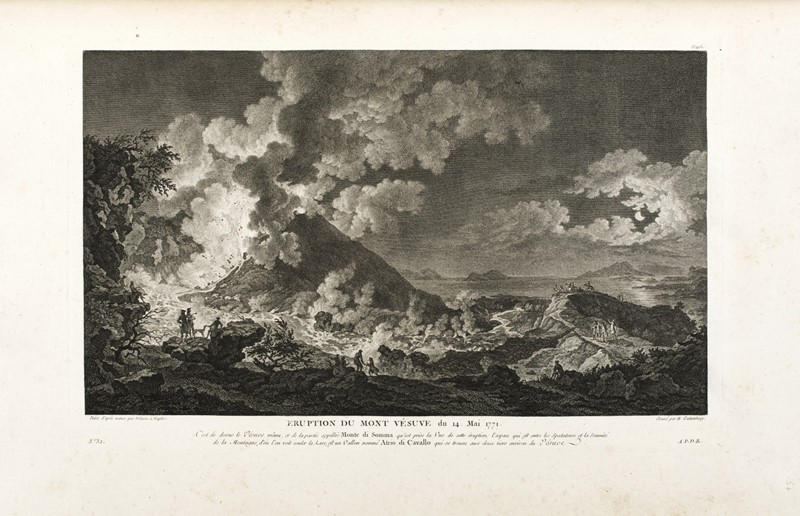
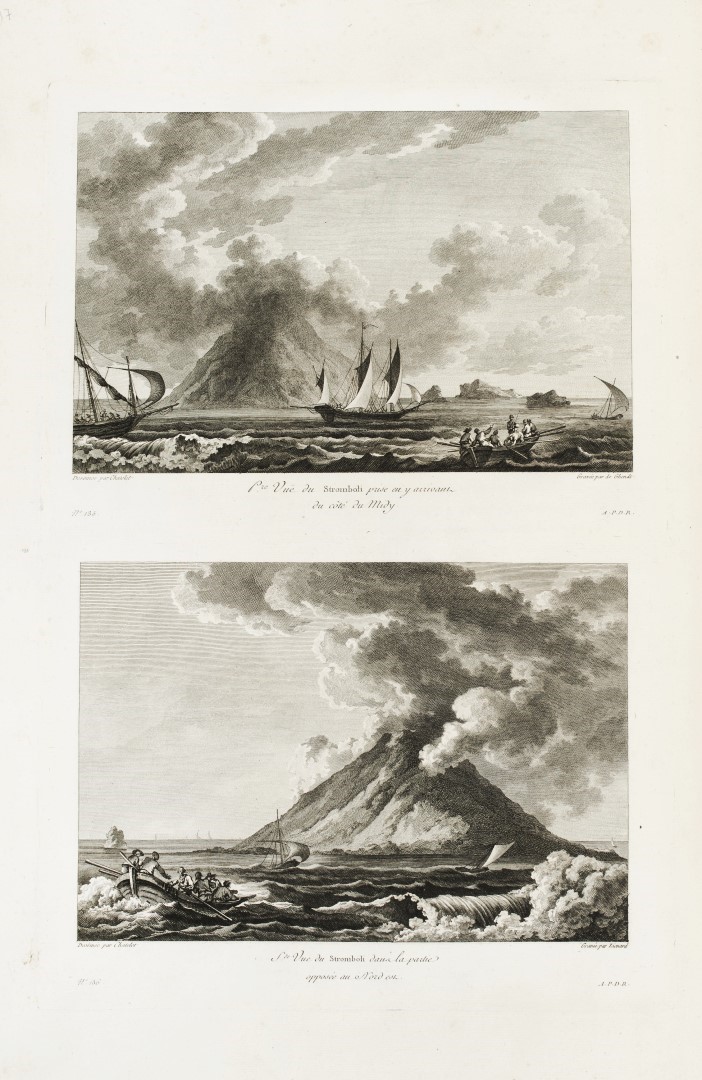
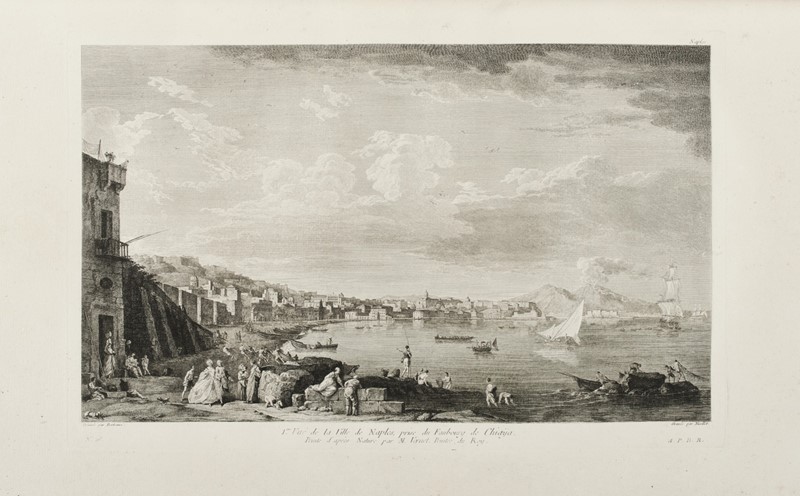
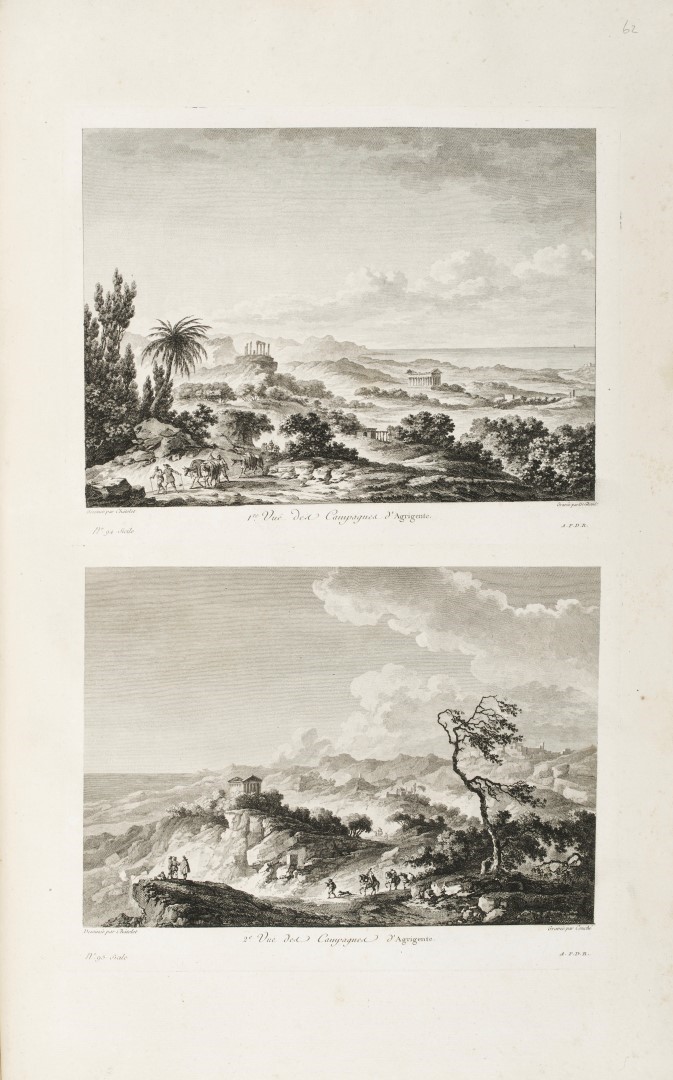
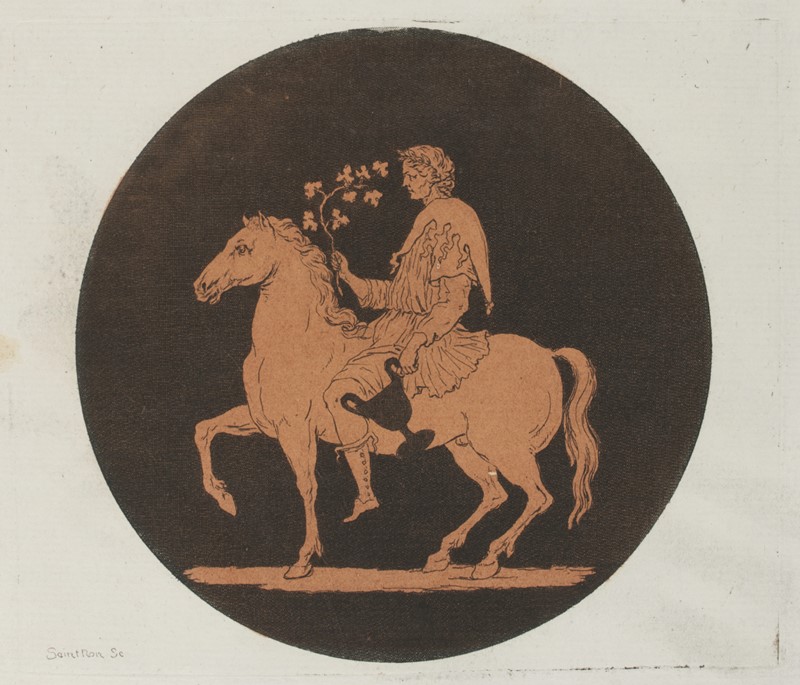
Molte tavole incise in rame fuori testo: fra queste 10 Carte Geografiche, delle quali 9 su doppia pagina. Il numero delle illustrazioni è molto più elevato, giacché molte tavole recano due incisioni. Con 25 grandi finalini che raffigurano scene mitologiche colorati in due toni di rosso e nero alla maniera dei vasi greci antichi.
La legatura presenta tracce d’uso e piccole mancanze alle cuffie. Internamente alcune pagine con qualche macchia e tracce di umidità, esemplare con ampi margini.
Rara prima edizione in prima tiratura, opera magnificamente figurata. In questa prima tiratura le tavole 84, 85, 86, 87 e 88 sono numerate per errore 24, 11, 12, 24bis e 15.
L’apparato iconografico è finemente inciso in rame da Choffard, Duplessis-Bertaux, Saint-Aubin, Saint-Non medesimo, Fessard, Le Bas e altri artisti dai disegni di Cochin, Fragonard, Huber-Robert, Paris e altri maestri francesi del XVIII secolo.
L’illustrazione comprende: 5 grandi vignette allegoriche sui titoli, la dedica alla Regina di Francia, 14 Testatine, 96 grandi finali di pagina, 10 carte geografiche, 1 pianta topografica di Napoli, oltre alle tavole con vedute, monumenti, reperti archeologici, opere d’arte. Di notevole rilievo il volume 2, che contiene i 25 Finalini colorati in rosso e nero.
Opera importantissima che fornisce preziose testimonianze iconografiche, con i disegni degli scavi archeologici di Ercolano e la città di Messina prima del terremoto del 1783. Si tratta di una delle più spettacolari opere dedicate alla Sicilia e al Regno di Napoli, e di particolare importanza per l'illustrazione dei siti antichi e per i relativi ritrovamenti. Paris fu uno dei primi artisti ammessi a disegnare direttamente ad Ercolano, dove durante i primi scavi era proibito disegnare e prendere note. Inoltre le tavole di Denon sono impareggiabili fonti di riferimento dell'aspetto di Messina prima del terremoto del 1783, come
Il testo descrittivo è oggi attribuito al pittore, scultore e letterato D. Vivant-Denon. L’abbé de Saint-Non, ideatore e coordinatore dell’impresa si rovinò per condurla a termine.
Bibliografia: Cicognara 2708; Blackmer 1473, 62-63.
Condition Report
SAINT-NON, Abbé; de. Voyage pittoresque ou description des Royaumes de Naples et de Sicilie.
Paris, [Clousier], 1781-1786
5 Folio volumes. 538 x 340 mm. Contemporary quarter leather and marbled cardboard binding, with corners, titles, and volume number on red and green morocco labels on the ribbed spines with gilt ornaments.
Consist of:
Vol. 1: pp. 6, XIII, 3, 252; 51 engraved plates outside the text.
Vol. 2 (1.2): 4, XXVIII, 283, 9; 83 plates outside the text.
Vol. 3: 4, IV, XL, 184, 7-22, 185-201, 1 blank; 64 plates outside the text.
Vol. 4: 6, XVIII, 4, 266; 71 plates outside the text.
Vol. 5 (4.2): 4, IV, 3, 268-429, 1; 21 plates outside the text.
The second part of the first volume replaces the second. Large vignettes on the title pages, headpieces, endpapers and ornaments, all copper-engraved.
Many copper-engraved plates outside the text, including 10 geographical maps, 9 of which are double-page. The number of illustrations is much higher, as many plates feature two engravings. There are 25 large endpieces depicting mythological scenes, colored in two tones of red and black in the style of ancient Greek vases.
The binding shows signs of wear and small losses to the spine ends. Some internal pages have some spots and humidity stains. Copy with wide margins.
A rare first edition, a magnificently illustrated work. In this first issue, plates 84, 85, 86, 87, and 88 are mistakenly numbered 24, 11, 12, 24bis, and 15.
The illustrations are finely engraved in copper by Choffard, Duplessis-Bertaux, Saint-Aubin, Saint-Non himself, Fessard, Le Bas, and other artists, based on drawings by Cochin, Fragonard, Huber-Robert, Paris, and other 18th-century French masters.
The illustrations include: 5 large allegorical vignettes on the titles, a dedication to the Queen of France, 14 small headpieces, 96 large tail-pieces, 10 geographical maps, 1 topographical map of Naples, in addition to the plates with views, monuments, archaeological finds, and works of art. Of particular note is Volume 2, which contains the 25 small endpieces colored in red and black.
This extremely important work provides valuable iconographic evidence, with drawings of the archaeological excavations of Herculaneum and the city of Messina before the 1783 earthquake. It is one of the most spectacular works dedicated to Sicily and the Kingdom of Naples, and is particularly important for illustrating the ancient sites and their discoveries. Paris was one of the first artists allowed to draw directly at Herculaneum, where drawing and taking notes were prohibited during the early excavations. Furthermore, Denon's plates are unparalleled sources of reference for the appearance of Messina before the 1783 earthquake, as
The descriptive text is now attributed to the painter, sculptor, and scholar D. Vivant-Denon. The Abbé de Saint-Non, the creator and coordinator of the undertaking, ruined himself completing it.
Cicognara 2708; Blackmer 1473, 62-63.
Bibliografia
Cicognara 2708; Blackmer 1473, 62-63.
mer 18 Febbraio 2026
Orari Asta
Via dei Soncin, 28 35122 Padova
ESIBIZIONE: 13-16 Febbraio 2026 solo su appuntamento.
Per prenotare il vostro appuntamento chiamare il numero 049 8755317 o mandare una email a info@badoemart.it
Ricordiamo che il nostro staff rimane a vostra disposizione per eseguire condition report dettagliati con foto aggiuntive a quelle già presenti in catalogo.

Bado e Mart
https://www.badoemart.it/img-footer/logo.png
Bado e Mart Srl
Via Dei Soncin, 28
35122 Padova Veneto Italy
Tel. +39 049 8755317
Fax +39 049 8755317
E-mail: info@badoemart.it
Partita IVA IT00773300280
35122 Padova Veneto Italy
Tel. +39 049 8755317
Fax +39 049 8755317
E-mail: info@badoemart.it
Partita IVA IT00773300280
Follow us on
Copyright Bado e Mart 2018. All rights reserved.
Realized by Thetis Srl
Realized by Thetis Srl