Share our site:

SHARE
115
VITRUVIUS. Architettura con il suo commento et figure Vetruuio in volgar lingua raportato per m. Gianbatista Caporali di [..]
1536
EUR 3.000,00
Base d'asta
EUR 4.000,00 / 5.000,00
Stima
Descrizione
VITRUVIUS. Architettura con il suo commento et figure Vetruuio in volgar lingua raportato per m. Gianbatista Caporali di [..]
1536
1536
VITRUVIUS POLLIO, Marcus. Architettura con il suo commento et figure Vetruuio in volgar lingua raportato per m. Gianbatista Caporali di Perugia.
Perugia, Giano Bigazzini, 1536
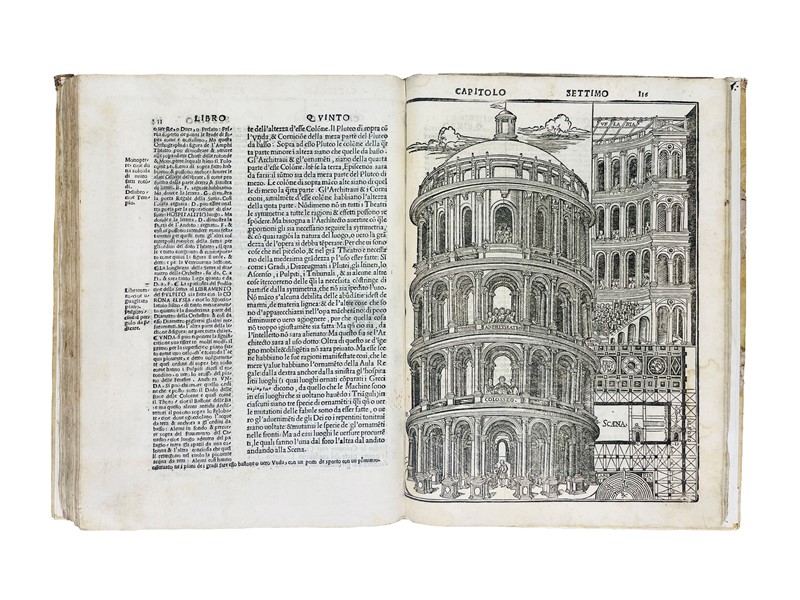
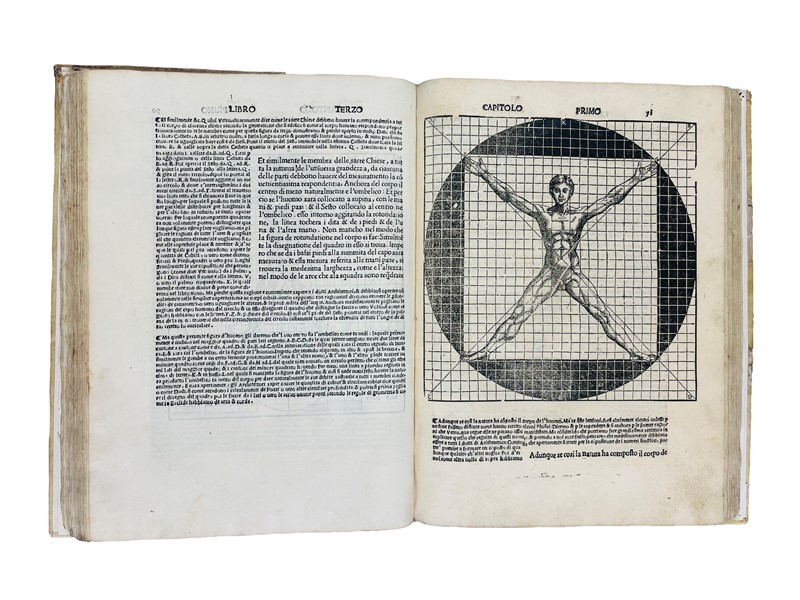
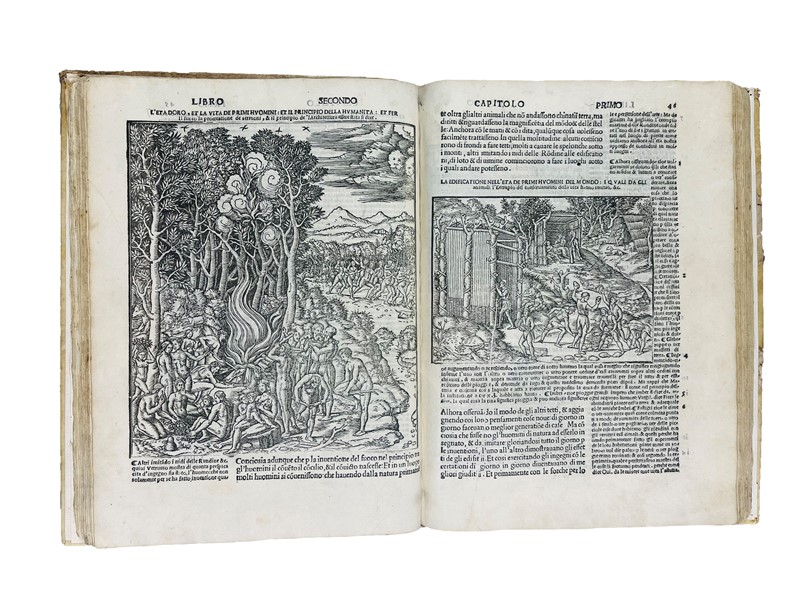
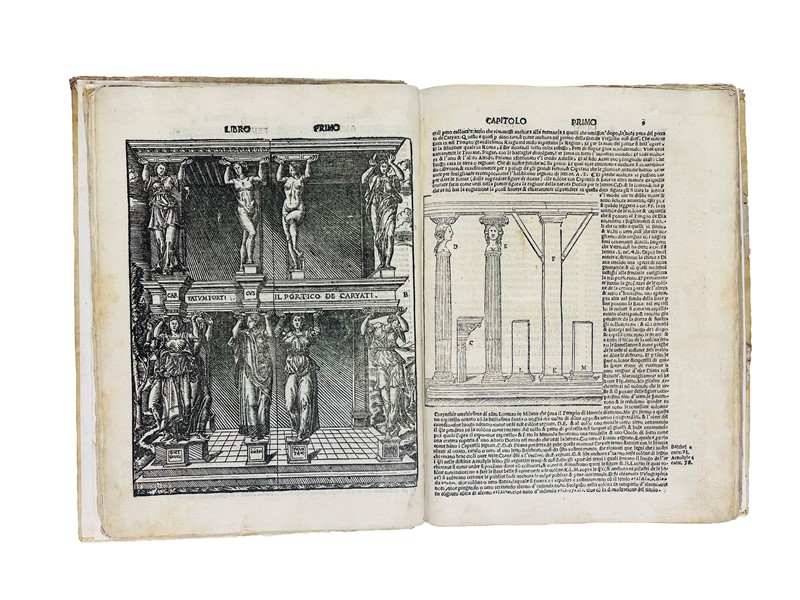
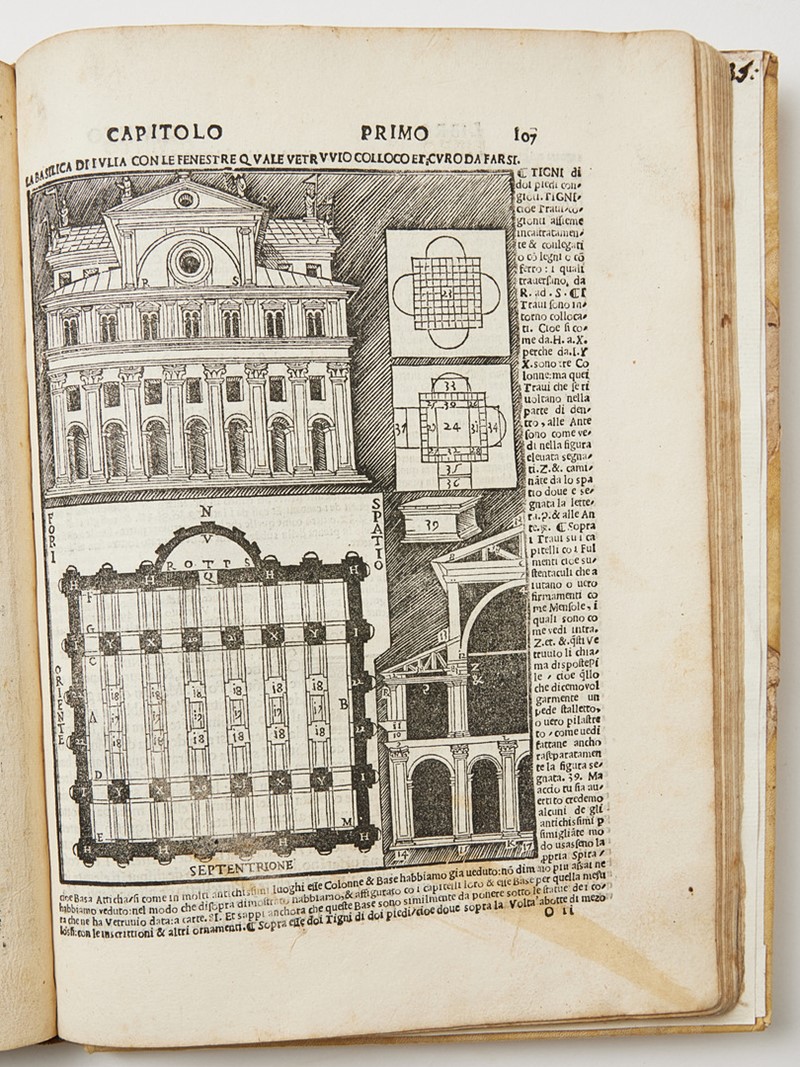
4to. 300x225 mm. Legatura posteriore in pergamena, risguardi rinnovati. Carte (3, incluso Frontespizio), 131. 71 righe più titolo. Testo in caratteri romani inquadrato entro un commento in caratteri più piccoli e con caratteri greci. Iniziali istoriate, una grande Q con una veduta prospettica di edifici. Frontespizio architettonico xilografico con ritratto e stemma del traduttore sui bordi, foglio di dedica con ritratto xilografico a figura intera di Giano Bigazzini, 81 illustrazioni xilografiche, alcune a piena pagina. Tracce d’uso sulla legatura, leggermente ingiallito e macchiato, in alcuni punti più pesante (che interessa anche il frontespizio xilografico e 1 xilografia a tutta pagina), alcune macchie d'acqua soprattutto all'inizio.
Prima edizione figurata della traduzione in italiano del Caporali dei primi cinque libri di Vitruvio. Quest’opera fu stampata a Perugia dal protettore del Caporali, il Conte Bigazzini, che creò appositamente per questa edizione l’impresa tipografica. Giovanni Battista Caporali fu un attivo architetto di Perugia che costruì diversi edifici molti dei quali ancora sopravvivono, e fu un apprezzato pittore della cerchia di Signorelli. In quest’opera si dimostra competente traduttore e valido commentatore. La sua traduzione e le xilografie si basano su quelle dell'edizione italiana del 1521.
Il libro è molto attraente per la veste tipografica e per le moltissime illustrazioni che presentano anche soggetti originali. Il frontespizio architettonico riccamente figurato comprende anche un ritratto e lo stemma del traduttore.
L'editore di questa edizione, il conte Giano Bigazzini, è raffigurato in abiti militari, nella carta non numerata dopo il Frontespizio; ha lavorato come condottiero per la Repubblica di Venezia prima di ritirarsi a Perugia e dedicarsi alla letteratura e all'arte. La sua tipografia privata ha prodotto solo due opere: questa edizione dei primi cinque libri di Vitruvio preparata dall'artista perugino Giovanni Battista Caporali e un volume di poesie di Lodovico Dolce.
Il tipografo potrebbe essere stato Luca Bini, che in quel periodo si trovava a Perugia.
Fowler 400; Cicognara 705; Berlin Kat. 1805; Mortimer 546; BM STC It., p. 735; Sander III, 7700; No in Adams.
Condition Report
VITRUVIUS POLLIO, Marcus. Architettura con il suo commento et figure Vetruuio in volgar lingua raportato per m. Gianbatista Caporali di Perugia.
Perugia, Giano Bigazzini, 1536
4to. 300 x 225 mm. Later vellum, renewed endpapers. Leaves (3, including the title page), 131. 71 lines plus headline. Text in Roman type framed within a commentary in smaller types and Greek type. Historiated initials, a large Q with a perspective view of buildings. Woodcut architectural title page with portrait and coat of arms of the translator in the border, dedication sheet with full-length woodcut portrait of Giano Bigazzini, 81 woodcut illustrations, some full-page. Traces of wear on the binding, slightly stained, heavier in some places (also affecting the woodcut title page and 1 full-page woodcut), some water stains, especially at the beginning.
First illustrated edition of Caporali's Italian translation of the first five books of Vitruvius. This work was printed in Perugia by Caporali's patron, Count Bigazzini, who created the printing press specifically for this edition. Giovanni Battista Caporali was an active architect from Perugia who built several buildings, many of which still survive, and was a respected painter in Signorelli's circle. In this work, he demonstrates his skill as a translator and a valuable commentator. His translation and woodcuts are based on those of the 1521 Italian edition.
The book is highly attractive for its typographic design and numerous illustrations, some of which feature original subjects. The richly illustrated architectural titlepage also includes a portrait of the translator's and his coat of arms.
The publisher of this edition, Conte Giano Bigazzini, is depicted in military dress; he had worked as a condottiere for the Republic of Venice before retiring to his native Perugia and immersing himself in literary and artistic pursuits. His private press produced just two works: this edition of Vitruvius's first five books prepared by the Perugian artist Giovanni Battista Caporali, and a volume of poems by Lodovico Dolce. The printer may have been Luca Bini who was in Perugia at this time.
Fowler 400; Cicognara 705; Berlin Kat. 1805; Mortimer 546; BM STC It., p. 735; Sander III, 7700; No in Adams.
Bibliografia
Fowler 400; Cicognara 705; Berlin Kat. 1805; Mortimer 546; BM STC It., p. 735; Sander III, 7700; No in Adams.
mer 18 Febbraio 2026
Orari Asta
Via dei Soncin, 28 35122 Padova
ESIBIZIONE: 13-16 Febbraio 2026 solo su appuntamento.
Per prenotare il vostro appuntamento chiamare il numero 049 8755317 o mandare una email a info@badoemart.it
Ricordiamo che il nostro staff rimane a vostra disposizione per eseguire condition report dettagliati con foto aggiuntive a quelle già presenti in catalogo.

Bado e Mart
https://www.badoemart.it/img-footer/logo.png
Bado e Mart Srl
Via Dei Soncin, 28
35122 Padova Veneto Italy
Tel. +39 049 8755317
Fax +39 049 8755317
E-mail: info@badoemart.it
Partita IVA IT00773300280
35122 Padova Veneto Italy
Tel. +39 049 8755317
Fax +39 049 8755317
E-mail: info@badoemart.it
Partita IVA IT00773300280
Follow us on
Copyright Bado e Mart 2018. All rights reserved.
Realized by Thetis Srl
Realized by Thetis Srl