Share our site:

SHARE
100
CORONELLI. Palazzi e Feste Veneziane.
EUR 10.000,00
Base d'asta
EUR 12.000,00 / 15.000,00
Stima
Descrizione
CORONELLI. Palazzi e Feste Veneziane.
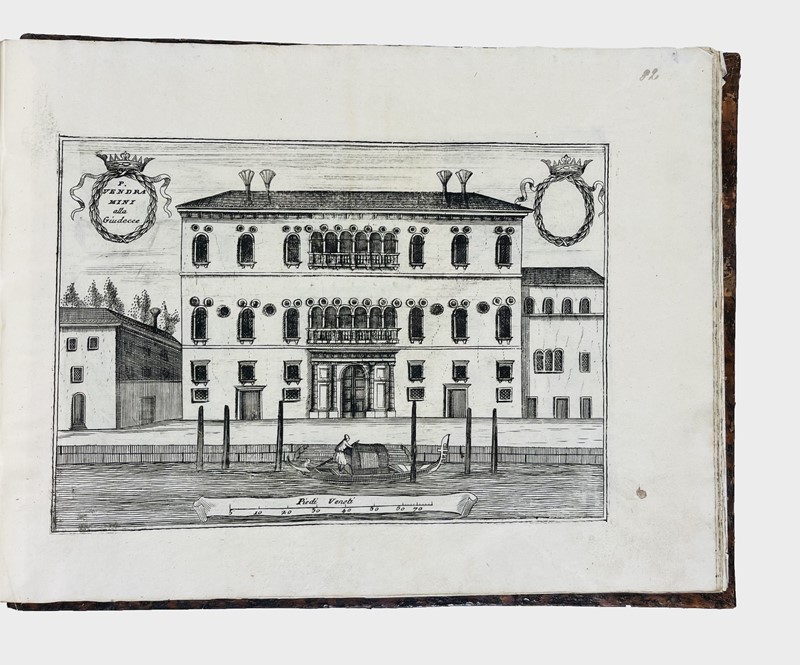
CORONELLI, Vincenzo Maria. Palazzi e Feste Veneziane.
Venezia, 1709 ca.
4to oblungo. 255x335 mm. Legatura coeva in piena pelle bruna marmorizzata, dorso a nervi con fregi in oro. 200 tavole incise in rame, con ampi margini, incisi di circa 184x260 mm. Le tavole recano un’antica numerazione a penna sul margine superiore, in due serie di 100.
Rarissima e prestigiosa raccolta di incisioni del Coronelli.
La serie è così ripartita:
- 19 Frontespizi ornati e figurati con elaborate volute barocche, fra questi anche l’emblema figurato dell’Accademia degli Argonauti;
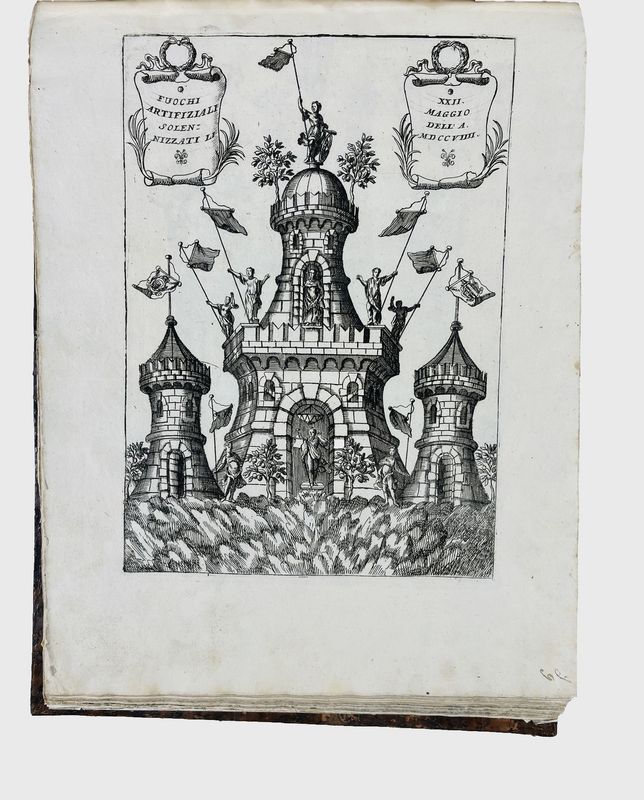
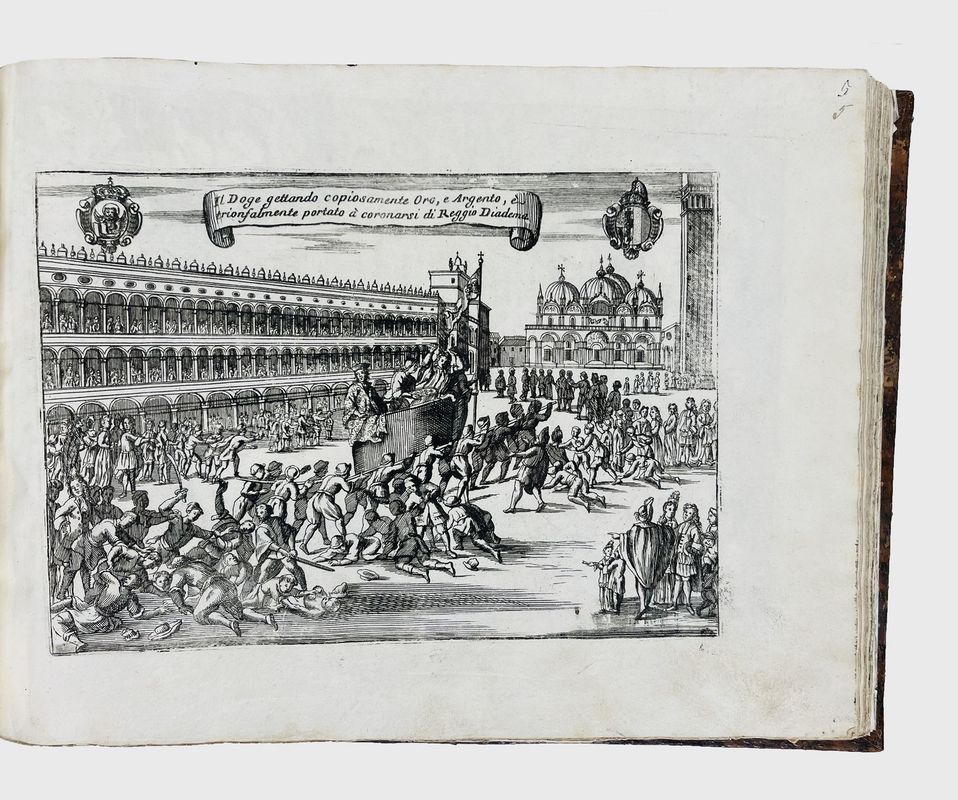
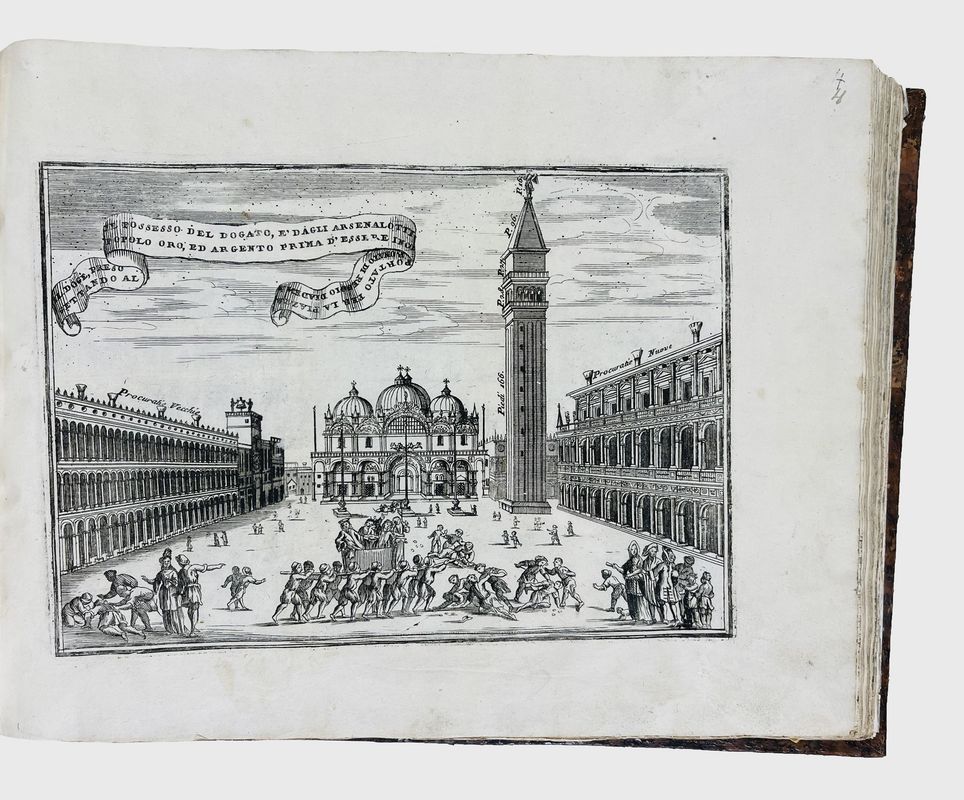
- 10 tavole che raffigurano Feste, tenute nell’occasione dell’elezione del Doge Giovanni Secondo Cornaro il 22 Maggio 1709;
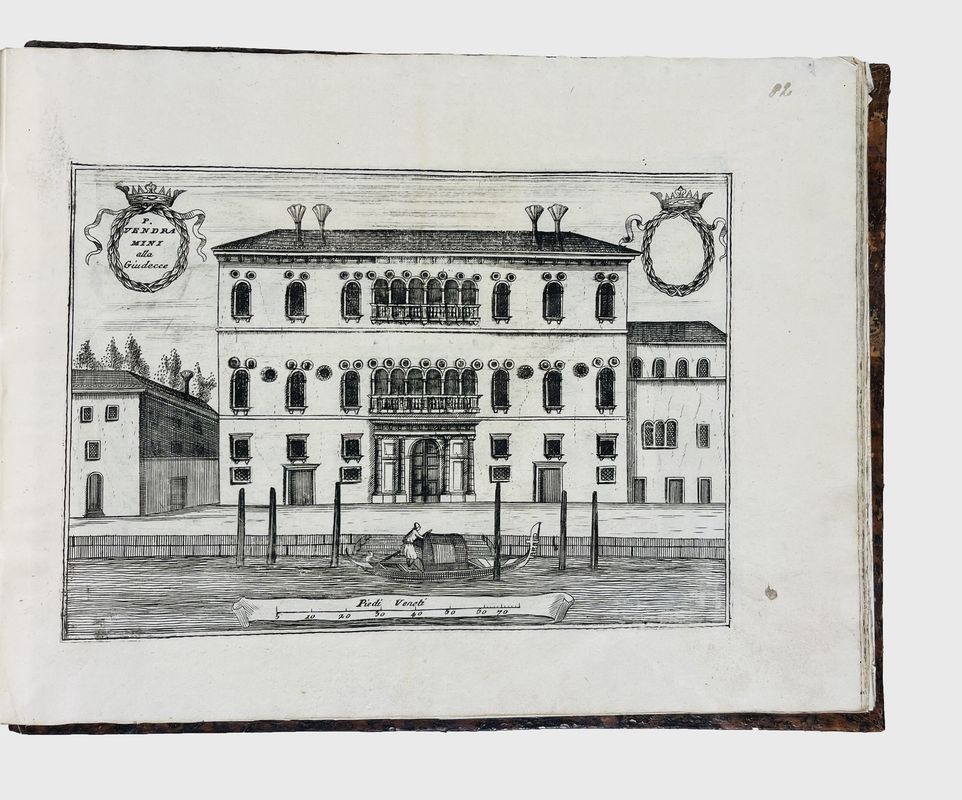
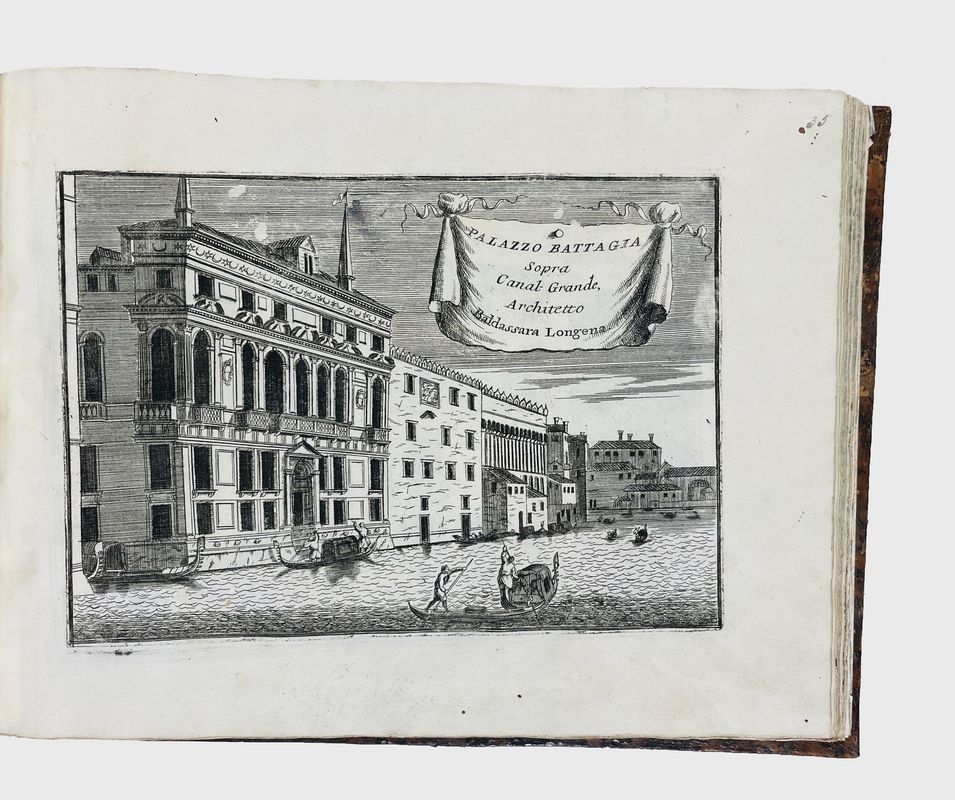
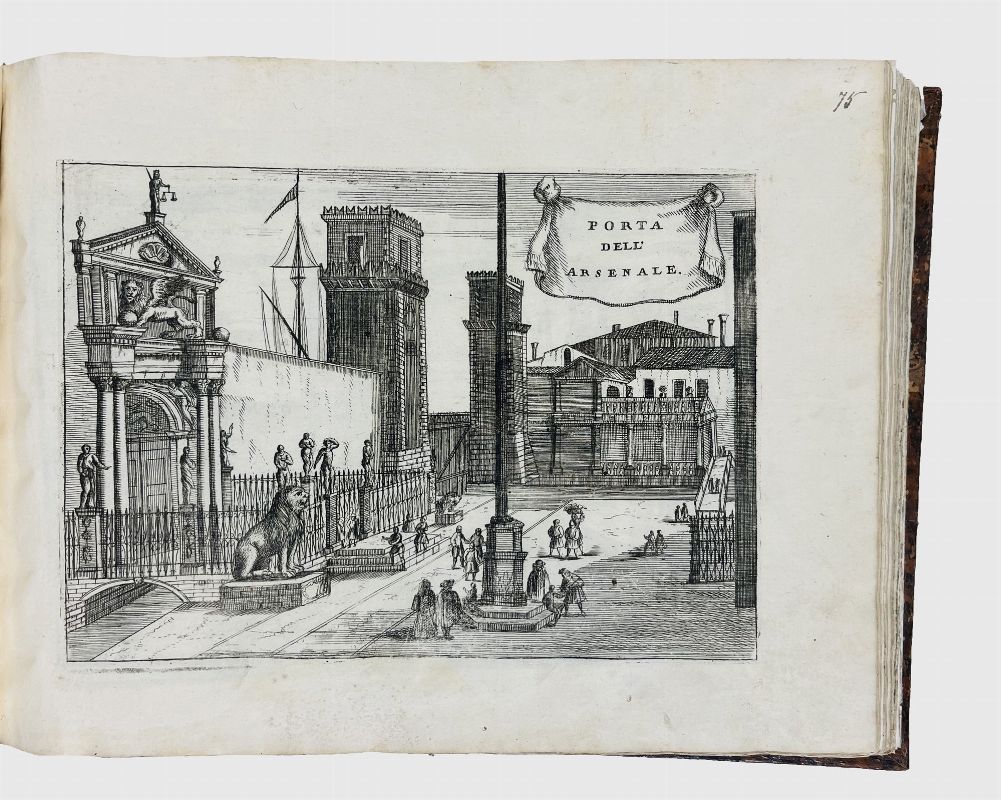
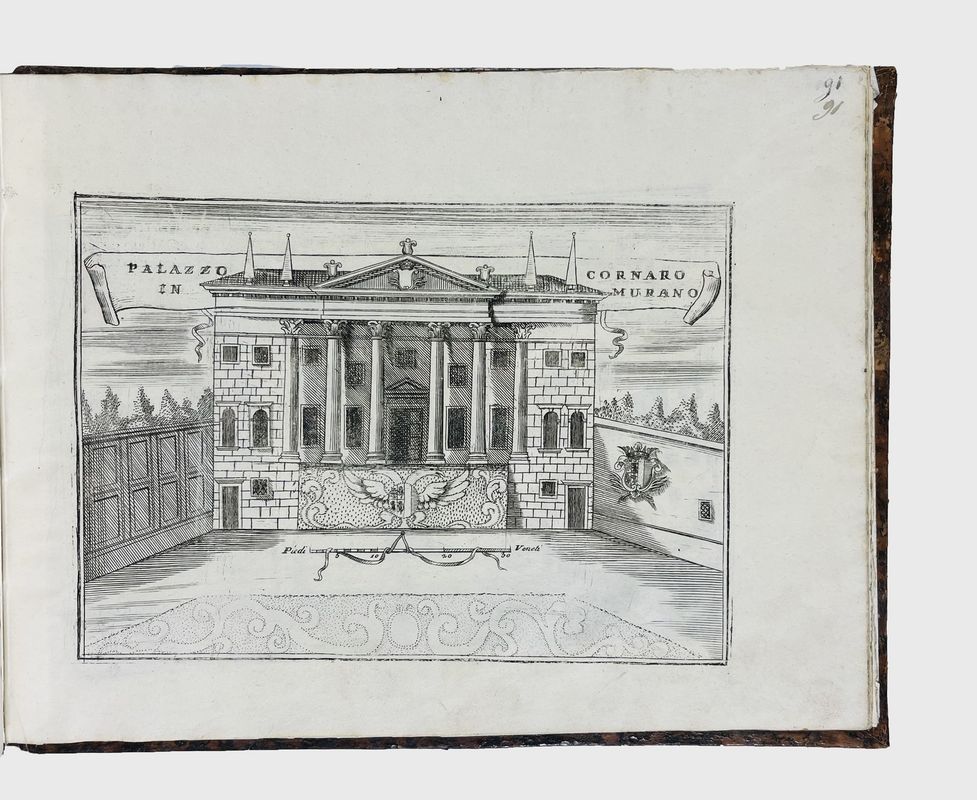
- 160 tavole con i Palazzi e le architetture monumentale di Venezia, ove sono raffigurate le più importanti e ricche residenze patrizie, a volte anche con tavole dedicate a particolari degni di nota quali giardini o interni; fra queste, 10 sono dedicate al Palazzo Ducale, 6 all’Arsenale e 5 al Ponte di Rialto e alle “fabbriche” che fanno parte del complesso di Rialto;
- 11 di vario soggetto (alberi genealogici, cronologie, schemi e raffigurazione dell’elezione del Doge).
Importantissima fonte iconografica di Venezia. La presente raccolta fa parte della serie incisa per il volume dei “Palazzi” delle ‘Singolarità’ del 1709, sia per il formato che per la presenza delle tavole delle “Feste” per l’elezione del Doge Cornaro nel 1709 che proprio in quel volume furono pubblicate. Va qui notata l’importanza che queste tavole rivestono anche dal punto di vista urbanistico e architettonico giacché rappresentano un documento di taglio quasi “cronachistico” che sottolinea le novità e i mutamenti che determinavano nella città in quegli anni.
Segnaliamo, ad esempio: la tavola 52, che raffigura il ‘Palazzo da Ponte a S. Maurizio’ reca sul margine superiore un’antica nota manoscritta che segnala “Abruciatto il di Primo Giugno 1801”; l’interno del Teatro Grimani a S Giovanni Crisostomo (tavola 82).
Fin dal 1707 il Coronelli elaborò il progetto di un’opera in 10 tomi in folio che doveva prendere il nome di “Singolarità di Venezia”, ma questo ambizioso intento non prese mai corpo, mentre con questo titolo restano tre raccolte in 4to oblungo che riguardano le “Chiese di Venezia”, i “Palazzi di Venezia” e i “Palazzi della Brenta”. Tuttavia in questa come in molte altre opere del Coronelli, il numero delle tavole e la stessa composizione e ordine dell’apparato iconografico non è fisso e sicuramente determinato.
Questo perché nella vastissima produzione dell’officine del Coronelli le tavole erano anche stampate inizialmente come fogli volanti e solo in un secondo momento venivano raccolte per comporre opere specifiche.
Vincenzo Maria Coronelli (1650-1718) fu grande erudito, geografo e cosmografo; fondo l’Accademia degli Argonauti, che è considerata la più antica società geografica del mondo.
Dal 1685 cosmografo della Serenissima, si contano oltre 400 carte stampate della sua officina.
Armao, 1944, pp. 170-78.
Condition Report
CORONELLI, Vincenzo Maria. Palazzi e Feste Veneziane (Venetian Palaces and Festivals).
Venice, c. 1709
Oblong 4to. 255x335 mm. Contemporary full marbled brown leather binding, ribbed spine with gilt friezes. 200 copper engraved plates, with wide margins, engraved approximately 184x260 mm. The plates bear an antique pen numbering on the upper margin, in two series of 100.
Extremely rare and prestigious collection of engravings by Coronelli.
The series is divided as follows:
- 19 ornate and illustrated titlepages with elaborate Baroque scrolls, including the emblem of the Accademia degli Argonauti;
- 10 plates depicting the celebrations held on the occasion of the election of Doge Giovanni Secondo Cornaro on 22 May 1709;
- 160 plates with the palaces and monumental architecture of Venice, depicting the most important and richest patrician residences, sometimes with plates dedicated to noteworthy details such as gardens or interiors; among these, 10 are dedicated to the Doge's Palace, 6 to the Arsenale and 5 to the Rialto Bridge and the “fabbriche” (buildings) that are part of the Rialto complex;
- 11 of various subjects (family trees, chronologies, diagrams and depictions of the election of the Doge).
An extremely important iconographic source on Venice. This collection is part of the series engraved for the 1709 volume of “Palazzi” in the “Singolarità” series, both in terms of format and the presence of the plates depicting the “Feste” for the election of Doge Cornaro in 1709, which were published in that very volume. It should be noted here that these plates are also important from an urban and architectural point of view, as they represent an almost “chronicle-like” document that highlights the innovations and changes that were taking place in the city during those years.
For example, plate 52, which depicts the “Palazzo da Ponte a S. Maurizio”, bears an ancient handwritten note on the upper margin indicating “Abruciatto il di Primo Giugno 1801” (Burned on the first of June 1801); the interior of the Grimani Theatre in S Giovanni Crisostomo (plate 82).
As early as 1707, Coronelli developed a project for a 10-volume folio work to be called ‘Singolarità di Venezia’ (Singularities of Venice), but this ambitious undertaking never came to fruition. Instead, three collections in oblong quarto format remain under this title, concerning the ‘Chiese di Venezia’ (Churches of Venice), the ‘Palazzi di Venezia’ (Palaces of Venice) and the ‘Palazzi della Brenta’ (Palaces of the Brenta). However, in this work, as in many others by Coronelli, the number of plates and the composition and order of the iconographic apparatus are not fixed and definitively determined.
This is because, in the vast production of Coronelli's workshop, the plates were initially printed as loose sheets and only later collected to compose specific works.
Vincenzo Maria Coronelli (1650-1718) was a great scholar, geographer and cosmographer; he founded the Accademia degli Argonauti, which is considered the oldest geographical society in the world.
From 1685, he was cosmographer of the Serenissima, and over 400 maps were printed by his workshop.
Armao, 1944, pp. 170-78.
Bibliografia
Armao, 1944, pp. 170-78.
mer 18 Febbraio 2026
Orari Asta
Via dei Soncin, 28 35122 Padova
ESIBIZIONE: 13-16 Febbraio 2026 solo su appuntamento.
Per prenotare il vostro appuntamento chiamare il numero 049 8755317 o mandare una email a info@badoemart.it
Ricordiamo che il nostro staff rimane a vostra disposizione per eseguire condition report dettagliati con foto aggiuntive a quelle già presenti in catalogo.

Bado e Mart
https://www.badoemart.it/img-footer/logo.png
Bado e Mart Srl
Via Dei Soncin, 28
35122 Padova Veneto Italy
Tel. +39 049 8755317
Fax +39 049 8755317
E-mail: info@badoemart.it
Partita IVA IT00773300280
35122 Padova Veneto Italy
Tel. +39 049 8755317
Fax +39 049 8755317
E-mail: info@badoemart.it
Partita IVA IT00773300280
Follow us on
Copyright Bado e Mart 2018. All rights reserved.
Realized by Thetis Srl
Realized by Thetis Srl